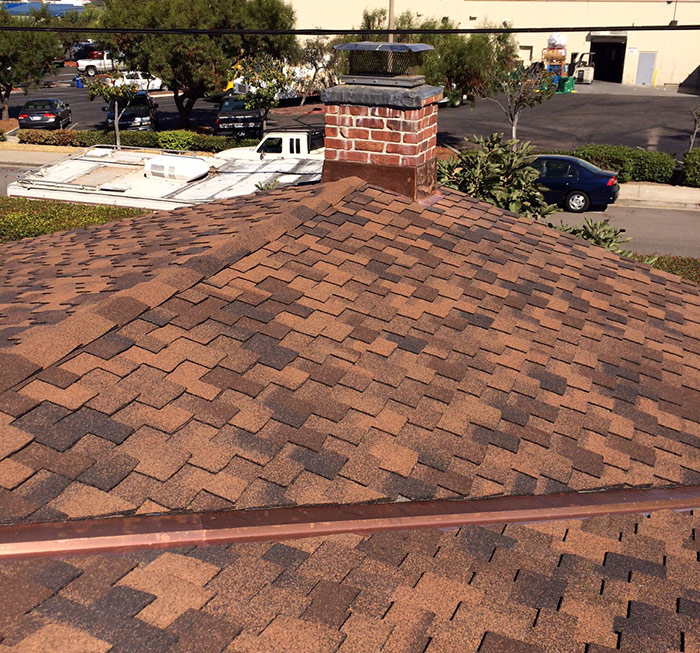
Roof Leaks Are Almost Never Where You Think They Are
Posted: March 2, 2026 | By: Taylor Landress | Category: Roofing Education
That ceiling stain? The water probably entered your roof several feet away, and here’s why that matters for your repair.
You notice a brown ring on your ceiling. Your first thought: there must be a hole in the roof right above it. It’s a completely natural assumption, and it’s almost always wrong.
Water is patient. Once it slips through a gap in your roofing system, it doesn’t fall straight down. It wanders. It follows slopes, seams, and structural members until gravity finally pulls it into your living room, often several feet from where it entered.
Understanding this changes everything about how a leak should be diagnosed, repaired, and prevented from coming back. If you are unsure or need piece of mind today, get a free inspection.
Why Water Doesn’t Travel in a Straight Line
Your roof isn’t a single layer; it’s a system. Underneath the visible shingles or membrane sits underlayment, structural decking, insulation, and framing. When water breaches the outer surface, it begins moving along the path of least resistance through all of those layers.
Depending on roof pitch, framing direction, and where the entry point is located, that water can travel anywhere from a few inches to ten or more feet before it finds a gap and drips onto your ceiling, wall, or floor below.
This isn’t unusual. It’s how roofing systems behave. And it’s why experienced roofers never start a diagnosis where the water appears, they start where it could have entered.
of repeat leaks result from treating the symptom, not the source
feet of horizontal travel is common before water becomes visible inside
can pass between a rain event and when a stain first appears inside
Where Roof Leaks Actually Begin
Flat roof surfaces are rarely the culprit. The vulnerabilities that let water in are almost always located at transition points, places where materials meet, terminate, or shift over time.
- Chimney, vent & skylight flashing – Metal or sealant that separates the roof from penetrations; it expands, contracts, and eventually cracks or separates.
- Roof valleys – Where two slopes meet, concentrated water flow accelerates material wear and increases the risk of intrusion.
- Slope transitions & dormers – Angle changes create complex drainage patterns that challenge even well-installed systems over time.
- Roof edges & termination points – Eaves and rakes are exposed to wind-driven rain and often lack adequate protection as membranes age.
- Aging penetration sealants – Plumbing vents, electrical conduits, HVAC equipment – any sealant that’s a decade old is a candidate for failure.
All of these are common roof repair scenarios our San Diego team diagnoses and resolves regularly.
Why the Stain Appears After the Storm, Not During It
One of the most disorienting things about roof leaks is the time delay. You have a major rain event. Nothing seems wrong. Three days later, a ceiling stain appears out of nowhere.
This happens because moisture can travel slowly through insulation and roof assemblies, absorbing and releasing gradually. Your attic space may hold moisture for days before it saturates enough to reach drywall or ceiling material.
Why Patching the Obvious Spot Usually Fails
It’s a reasonable request: “The leak is right there, just patch that spot.” The problem is that “right there” is where the water ended up, not where it started.
When a repair targets only the visible symptom, the actual entry point remains open. Water continues entering the system. It finds the next available path, sometimes back through the same area, sometimes elsewhere entirely. The result is a second leak, a second repair call, and the frustrating impression that the original work didn’t hold.
Effective roof leak repair requires tracing water back to its source and addressing the root cause. This takes more time on the front end, and saves significant cost and disruption over time.
What a Professional Leak Inspection Actually Involves
A thorough roof inspection is not just a visual sweep of the area above your ceiling stain. It involves evaluating the full roofing system in context.
Drainage Pattern Analysis
Where does water flow on your specific roof during heavy rain? Slope direction, valley placement, and gutter position all affect where stress concentrates and where water is most likely to find a weakness.
Flashing & Transition Review
Every penetration and slope change is examined up close for signs of separation, corrosion, improper installation, or sealant failure — even if it’s far from the interior symptom.
Surrounding Material Assessment
Shingles, membrane, and underlayment adjacent to problem areas are evaluated for early-stage wear that could become the next entry point if not addressed alongside the primary repair.
Photo Documentation
A professional inspection should leave you with clear photographic evidence of what was found, where, and why it’s relevant. You should be able to see the problem, not just hear about it.
Common Questions About Roof Leaks
Why does my roof leak only during certain rainstorms?
Leaks often appear only under specific conditions because the entry point may require wind-driven rain, a particular angle of rainfall, or a certain volume of water before moisture overcomes the barrier. A slow drizzle may not reveal the same weakness that a heavy, windblown storm does.
How do I find where a roof leak is coming from?
Start by tracing any water stain or drip to higher areas of your ceiling or wall, then access your attic to look for moisture trails, staining on rafters, or wet insulation. However, pinpointing the roof entry point from inside is often inconclusive, a professional inspection from the roof surface is the most reliable approach, particularly for evaluating flashing, valleys, and penetrations.
Is a ceiling stain always caused by a roof leak?
Not always. Plumbing leaks from pipes or fixtures above the ceiling are a common alternative cause, as is condensation from HVAC systems. If the stain appears in an area without direct roof access above it, such as a second-floor bathroom, plumbing should be ruled out before pursuing a roofing repair.
How much does it cost to fix a roof leak in San Diego?
Repair cost depends on the location, cause, and extent of the leak. Minor flashing repairs or sealant replacement are typically less expensive than repairs involving damaged decking or widespread underlayment failure. An inspection is the only reliable way to determine scope and cost, and it prevents overpaying for unnecessary work or underpaying for an incomplete fix.
How long can a roof leak go undetected?
Months to years, in some cases. Slow leaks that enter through small gaps may absorb into insulation and roofing assemblies without ever producing a visible interior stain, until moisture accumulation reaches a tipping point. This is one reason annual inspections are valuable even when no interior signs are present.
Not Sure Where Your Leak Is Coming From?
A professional inspection gives you a clear picture of what’s happening and what it will actually take to fix it. No guessing. No repeat repairs.
📞 Call 619-464-2800 or visit raindanceroof.com to schedule